
Island of the Blue Dolphins: A Comprehensive Overview
Scott O’Dell’s novel, frequently available as a PDF, explores themes of resilience and isolation. It details a young Native American girl’s survival on a remote Pacific island, offering a poignant narrative about adaptation and cultural loss.
Island of the Blue Dolphins, penned by Scott O’Dell and often accessed as a PDF, is a captivating work of historical fiction published in 1960. The narrative draws inspiration from the true story of Juana Maria, a Native American woman who lived alone for eighteen years on San Nicolas Island, one of the Channel Islands off the coast of California. O’Dell masterfully reimagines her experiences through the eyes of Karana, a young girl left behind when her tribe evacuates their island home due to Russian fur hunters.
The novel quickly gained recognition, earning a Newbery Medal in 1961 and becoming a staple in middle school curricula. Its enduring appeal lies in its exploration of universal themes – loneliness, courage, the struggle for survival, and the clash between cultures. The PDF version allows for widespread accessibility, ensuring the story continues to resonate with readers across generations. O’Dell’s lyrical prose and vivid descriptions transport readers to the island, immersing them in Karana’s world and fostering a deep connection with her plight. It’s a story of remarkable self-reliance and the enduring power of the human spirit.
Historical Context: The Nicoleño People
The story within Island of the Blue Dolphins, readily available as a PDF, is deeply rooted in the history of the Nicoleño people, the Native American inhabitants of San Nicolas Island. Also known as the Pimugnait, they were a seafaring tribe who thrived for millennia, developing a unique culture intricately connected to the island’s resources. Their existence predates European contact by thousands of years, and they possessed a sophisticated understanding of the ocean and its bounty.
The arrival of Russian fur hunters in the early 19th century dramatically altered their way of life. Conflict arose, leading to a massacre in 1835 and the subsequent decision for most of the Nicoleño to relocate to the mainland. Juana Maria, the inspiration for Karana, was left behind, either intentionally or accidentally. Her eighteen years of solitude represent a tragic chapter in the history of the Nicoleño, a people whose culture was decimated by colonization. Studying the Nicoleño’s history alongside the PDF novel provides crucial context, highlighting the devastating impact of cultural clash and the resilience of indigenous populations.
Santa Catalina Island: The Real-Life “Island”
While Island of the Blue Dolphins, often accessed as a PDF, is fictionalized, it’s inspired by the true story of Juana Maria and set on a Channel Island off the coast of California. However, Scott O’Dell deliberately chose not to pinpoint the exact location, instead creating a composite island drawing inspiration primarily from Santa Catalina Island. This larger, more accessible island served as a convenient geographical model for readers to visualize Karana’s world.
Santa Catalina, like San Nicolas (the Nicoleño’s original home), is a relatively isolated landmass surrounded by the Pacific Ocean; Its diverse terrain – featuring rugged mountains, secluded coves, and abundant marine life – mirrors the environment Karana navigates. The island’s history also reflects themes present in the novel, including early Native American inhabitation and subsequent European settlement. Though not a direct replica, Santa Catalina provides a tangible, real-world counterpart to the fictional island, enhancing the story’s immersive quality. Exploring images of Santa Catalina while reading the PDF version enriches the reader’s understanding of the setting and Karana’s challenges.
Karana’s Isolation: A Detailed Examination
Within the pages of Island of the Blue Dolphins, readily available as a PDF, Karana’s profound isolation forms the core of the narrative. Abandoned after a conflict between her tribe and Russian seal hunters, she endures eighteen years alone on the island, a circumstance that dramatically shapes her character and worldview. This isn’t merely physical solitude; it’s a complete severance from her culture, language, and human connection.
The novel meticulously details the psychological impact of this prolonged separation. Karana’s initial grief and despair gradually give way to a pragmatic focus on survival, yet the yearning for companionship never fully disappears. Her isolation forces her to confront her own mortality and the fragility of existence. The PDF allows for close reading of her internal monologues, revealing a complex emotional landscape. She develops a unique relationship with the natural world, finding solace and purpose in her surroundings, but always carrying the weight of her loneliness. This enforced self-reliance is both a burden and a source of strength, defining her journey.
Survival Skills Demonstrated by Karana
The PDF version of Island of the Blue Dolphins vividly illustrates Karana’s remarkable resourcefulness and adaptability. Stranded on the island, she quickly learns to utilize its resources for sustenance and shelter, showcasing a diverse skillset born of necessity. Initially, she relies on salvaged items from the abandoned village, but soon masters hunting, fishing, and gathering wild plants.
Karana’s proficiency in crafting is particularly noteworthy. She constructs a secure dwelling, fashions tools from stone and bone, and expertly weaves baskets for carrying and storage. Her ability to create a bow and arrows demonstrates a keen understanding of weaponry and hunting techniques. The novel details her meticulous process of building a canoe, a testament to her engineering skills. Furthermore, she learns to preserve food, build fires, and navigate the island’s terrain. These skills, meticulously described within the PDF, aren’t innate but acquired through observation, experimentation, and unwavering determination, highlighting her resilience in the face of adversity.
The Impact of Solitude on Karana’s Psychology

The PDF of Island of the Blue Dolphins profoundly explores the psychological effects of prolonged isolation on Karana. Initially, her solitude is marked by grief and despair following the loss of her family and community. However, as time progresses, she develops complex coping mechanisms to navigate her emotional landscape.
Karana’s internal world becomes increasingly rich, filled with memories, reflections, and a growing connection to the natural world. While she experiences periods of intense loneliness, she also finds solace in her self-reliance and the beauty surrounding her. The narrative, accessible in the PDF format, reveals a gradual shift in her perception of time and her sense of self. She begins to anthropomorphize animals, finding companionship in their presence.

Yet, the isolation also manifests in moments of emotional volatility and a blurring of the lines between reality and imagination. The PDF showcases how Karana’s prolonged solitude shapes her identity, forcing her to confront her deepest fears and desires, ultimately leading to a unique form of self-discovery.
Animal Companionship: A Source of Comfort
The PDF version of Island of the Blue Dolphins vividly illustrates how animal companionship becomes crucial for Karana’s emotional survival. Initially wary, she gradually forms bonds with various creatures on the island, finding solace in their presence amidst her profound solitude. Rontu, the wild dog, is perhaps the most significant, evolving from a potential threat into a loyal friend and protector.
These relationships aren’t simply about practical assistance; they fulfill Karana’s deep-seated need for connection. The PDF details how she attributes human-like qualities to the animals, engaging in reciprocal interactions that alleviate her loneliness. She cares for them, shares her food, and even mourns their losses, demonstrating a profound empathy.
Furthermore, the animals provide Karana with a sense of purpose and responsibility, diverting her attention from her grief and fostering a renewed appreciation for life. The readily available PDF allows readers to witness how these interspecies connections become integral to Karana’s psychological well-being, highlighting the universal human need for companionship.
Building Shelter and Sustaining Life
The PDF of Island of the Blue Dolphins meticulously details Karana’s remarkable resourcefulness in establishing a sustainable life on the island. Abandoned and alone, her initial priority is constructing a secure shelter, initially a simple lean-to, which she progressively improves over the years. The narrative, easily accessible in PDF format, showcases her practical skills and unwavering determination.
Sustaining life requires mastering essential survival techniques. Karana learns to hunt, fish, and gather edible plants, adapting to the island’s resources. The PDF emphasizes her ingenuity in crafting tools and weapons from natural materials – stone, bone, and wood – enabling her to procure food and defend herself. She builds a canoe, expanding her access to fishing grounds and demonstrating her evolving mastery of the environment.
The PDF version highlights that her success isn’t merely about physical survival; it’s about adapting to a new way of life, embracing self-reliance, and finding a sense of belonging within the natural world. Karana’s journey is a testament to the human spirit’s capacity to endure and thrive even in the most challenging circumstances.

Crafting Tools and Weapons
The readily available PDF of Island of the Blue Dolphins vividly illustrates Karana’s exceptional skill in crafting essential tools and weapons. Stranded and needing to survive, she doesn’t rely on pre-made items but instead utilizes the island’s natural resources with remarkable ingenuity. The PDF details her process of transforming raw materials into functional objects.
Initially, she fashions simple tools from stone – knives for cutting, scrapers for preparing hides, and grinding stones for processing food. As her skills develop, detailed in the PDF, she creates more sophisticated weapons, including bows and arrows for hunting, and spears for fishing and defense. Bone and wood become crucial materials, shaped into spearheads, arrow points, and various implements.
The PDF emphasizes that this crafting isn’t merely about creating tools; it’s a demonstration of Karana’s intelligence, adaptability, and deep connection to the natural world. Each tool represents a step towards self-sufficiency and a testament to her unwavering determination to survive. Her ability to create these items is central to her prolonged existence on the island.
The Role of the Sea in Karana’s Survival
The PDF version of Island of the Blue Dolphins profoundly highlights the sea’s critical role in Karana’s prolonged survival. It’s not merely a surrounding body of water, but a vital source of sustenance, transportation, and even companionship. The narrative, accessible in the PDF, consistently portrays the ocean as both a provider and a potential threat.
Karana learns to fish skillfully, utilizing spears and woven nets to catch a variety of marine life. The PDF details her understanding of tides and currents, enabling her to maximize her fishing success. She also harvests shellfish and sea urchins, supplementing her diet. Beyond food, the sea provides materials for crafting – driftwood for shelter, shells for tools, and seaweed for various purposes.
The PDF also reveals Karana’s construction of a canoe, allowing her to explore the island’s coastline and venture further for resources. However, the sea also presents dangers, such as storms and treacherous currents. Ultimately, the PDF demonstrates Karana’s respect for, and dependence on, the ocean’s power and bounty.
Conflict with Animals: Sea Otters and Wild Dogs
The PDF of Island of the Blue Dolphins vividly portrays Karana’s complex relationships with the island’s animal inhabitants, particularly her conflicts with sea otters and wild dogs. Initially, Karana’s encounters with the sea otters are driven by necessity – she hunts them for their pelts to create clothing and shelter, details readily available within the PDF.
However, a pivotal moment in the PDF narrative involves Karana’s growing respect for the otters, culminating in a truce with Rontu, a particularly intelligent individual. This shift demonstrates her evolving understanding of the natural world. The conflict with the wild dogs, descendants of those brought by the Aleut hunters, is far more antagonistic, as documented in the PDF.
These dogs pose a constant threat to Karana’s safety and resources, leading to a prolonged and brutal struggle for survival. The PDF illustrates Karana’s determination to protect herself and her home, employing traps and weapons to defend against their attacks. These animal conflicts, as presented in the PDF, are central to Karana’s journey of adaptation and resilience.
Themes of Resilience and Adaptation
The PDF version of Island of the Blue Dolphins profoundly explores the themes of resilience and adaptation in the face of extreme adversity. Karana’s eighteen years of solitude on the island are a testament to the human spirit’s capacity to endure and overcome seemingly insurmountable challenges, as detailed throughout the PDF.
The PDF showcases Karana’s remarkable ability to adapt to her environment, learning to hunt, build shelter, and craft tools from natural resources. This adaptation isn’t merely about physical survival; it’s a psychological and emotional process, vividly portrayed in the PDF. She transforms from a dependent member of her tribe into a self-sufficient individual.
Furthermore, the PDF highlights Karana’s resilience in maintaining her sense of self and dignity despite her isolation. She confronts loss, loneliness, and danger with unwavering courage. The novel, accessible as a PDF, ultimately celebrates the power of the human spirit to not only survive but to find meaning and purpose even in the most desolate circumstances, making it a compelling study of human adaptability.
Cultural Clash and Colonialism
The PDF of Island of the Blue Dolphins subtly yet powerfully addresses the themes of cultural clash and the devastating impact of colonialism on Indigenous populations. The narrative, readily available as a PDF, depicts the disruption of the Nicoleño people’s traditional way of life due to the arrival of Russian seal hunters and their subsequent interactions with European-American settlers.
The PDF reveals how the introduction of foreign diseases, hunting practices, and a different worldview led to the decline and eventual disappearance of Karana’s tribe. This isn’t presented as a direct, overt conflict, but rather as a consequence of misunderstanding, exploitation, and the imposition of a dominant culture, as explored within the PDF.
Through Karana’s experiences, the PDF illustrates the loss of cultural identity and the struggle to maintain traditions in the face of overwhelming external forces. The novel, in its PDF format, serves as a poignant reminder of the human cost of colonization and the importance of respecting and preserving Indigenous cultures. It’s a critical lens through which to examine historical injustices.
The Narrative Style and Point of View
The PDF version of Island of the Blue Dolphins showcases a unique narrative style, employing a first-person perspective through Karana’s voice. This intimate viewpoint, readily accessible within the PDF, allows readers to directly experience her isolation, thoughts, and emotional journey on the island. O’Dell masterfully crafts a simple yet evocative prose style, mirroring the protagonist’s direct connection to nature and her limited formal education.
The narrative, as presented in the PDF, isn’t strictly chronological; it unfolds through Karana’s recollections and observations, creating a sense of immediacy and authenticity. This stylistic choice enhances the emotional impact of her story, drawing the reader into her world. The PDF reveals a deliberate pacing, alternating between moments of intense action and periods of quiet contemplation.
The first-person narration within the PDF also limits the reader’s perspective, offering only Karana’s understanding of events and characters. This creates a sense of mystery and encourages readers to interpret the story through her eyes, fostering a deeper connection with her resilience and spirit, all contained within the PDF.
Symbolism in the Novel: The Blue Dolphins
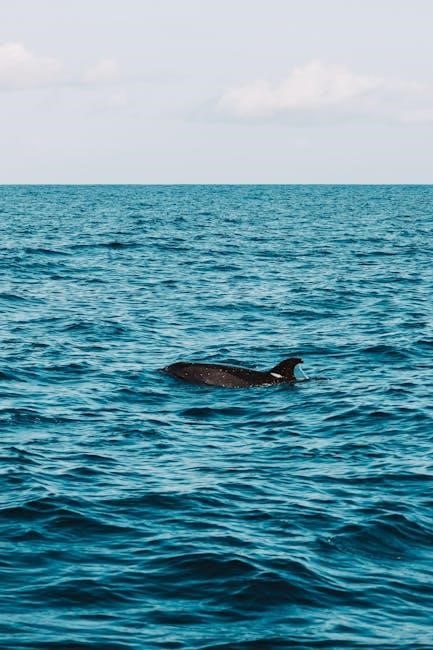
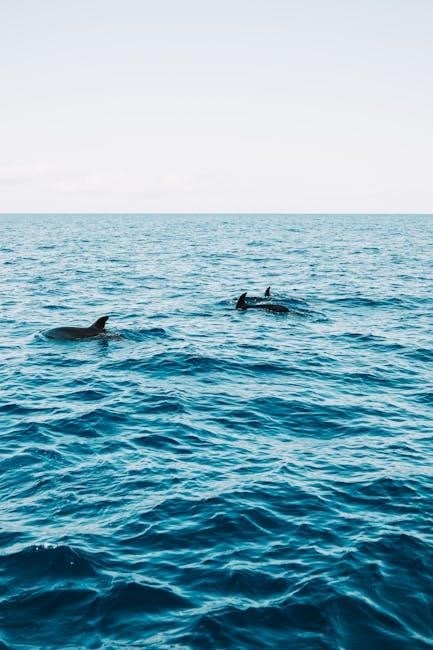
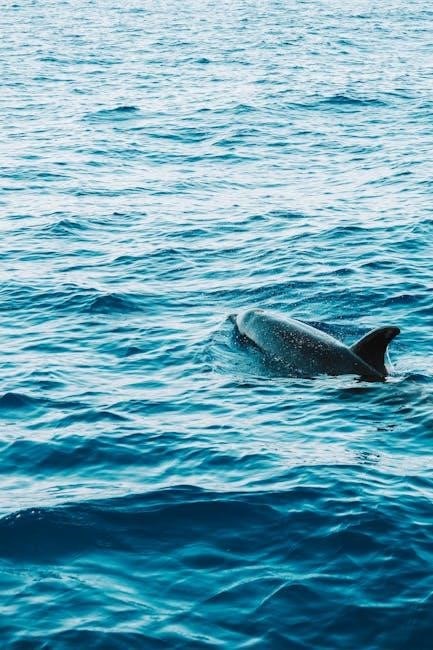
Within the PDF of Island of the Blue Dolphins, the blue dolphins themselves emerge as potent symbols, representing freedom, companionship, and a connection to the natural world. Their playful presence offers Karana solace during her prolonged isolation, as vividly depicted in the PDF’s text. The dolphins aren’t merely animals; they embody a spirit of untamed wilderness and resilience mirroring Karana’s own struggle for survival.
The PDF reveals how the dolphins symbolize Karana’s evolving relationship with the island. Initially wary, she gradually learns to trust and interact with them, signifying her acceptance of her surroundings and her adaptation to a solitary existence. Their blue hue, emphasized throughout the PDF, can be interpreted as representing hope and the vastness of the ocean, offering a sense of possibility amidst her confinement.
Furthermore, the PDF suggests the dolphins symbolize a lost connection to her people and culture. They represent a harmonious existence with nature, a way of life disrupted by the arrival of outsiders. Ultimately, the blue dolphins within the PDF serve as a powerful reminder of the enduring strength of the natural world and the human spirit’s capacity for adaptation.
Critical Reception and Literary Significance
The PDF version of Island of the Blue Dolphins has cemented the novel’s place as a cornerstone of young adult literature. Upon its 1960 publication, the book garnered immediate acclaim, winning the Newbery Medal and establishing Scott O’Dell as a significant voice in children’s fiction. Critical analysis, readily available alongside the PDF, often focuses on the novel’s sensitive portrayal of cultural displacement and the strength of the human spirit.
While praised for its lyrical prose and compelling narrative, the PDF’s content has also faced scrutiny regarding its historical accuracy and representation of the Nicoleño people. Contemporary critiques, often found in scholarly articles accompanying the PDF, debate the extent to which O’Dell romanticized Karana’s experience and potentially perpetuated harmful stereotypes.
Despite these debates, the PDF remains a widely read and taught text, valued for its exploration of universal themes like isolation, resilience, and the relationship between humanity and nature. Its enduring literary significance lies in its ability to spark dialogue about colonialism, cultural understanding, and the importance of preserving indigenous narratives, as evidenced by ongoing discussions surrounding the PDF’s interpretation.
Adaptations of “Island of the Blue Dolphins”
While a direct film adaptation mirroring the complete narrative of Scott O’Dell’s novel hasn’t materialized, the story of Karana has inspired various artistic interpretations. Though a PDF of a comprehensive film script isn’t widely available, several attempts at bringing the story to the screen have been documented, often facing challenges in faithfully representing the novel’s nuanced themes.
Notably, a 1974 animated television movie, produced by Filmation, offered a simplified version of the tale. This adaptation, often discussed in analyses accompanying the PDF version of the book, received mixed reviews for its departures from the source material. The animated film prioritized accessibility for a younger audience, sacrificing some of the novel’s complexity.
Furthermore, the story’s core themes have resonated in other media, influencing narratives of survival and isolation. Stage adaptations and theatrical interpretations, sometimes detailed in supplemental materials alongside the PDF, have explored Karana’s journey through performance. The enduring appeal of Island of the Blue Dolphins, even in its PDF format, continues to inspire creative reinterpretations, though a definitive, critically acclaimed adaptation remains elusive.
Educational Use and Continued Relevance
Scott O’Dell’s “Island of the Blue Dolphins” remains a staple in middle school curricula across the United States, frequently assigned as a PDF for convenient classroom access. Its enduring appeal stems from its exploration of universal themes – resilience, isolation, cultural clash, and the relationship between humanity and nature – making it a valuable tool for fostering critical thinking and empathy.
The novel’s historical context, concerning the Nicoleño people, sparks discussions about colonialism and the devastating impact of European contact on Indigenous populations. Teachers often utilize supplemental materials, available alongside the PDF version, to provide a more comprehensive understanding of this history. Analyzing the narrative’s perspective encourages students to consider the complexities of storytelling and representation.
Despite being published in 1960, the story’s themes resonate with contemporary issues, including environmental stewardship and the importance of preserving cultural diversity. The accessibility of the PDF format further enhances its educational value, allowing for widespread distribution and engagement. “Island of the Blue Dolphins” continues to inspire readers and remains a powerful testament to the human spirit’s capacity for survival.