
Free Somatic Workout Plan PDF: A Comprehensive Guide
Discover a pathway to well-being with readily available resources; explore free somatic workout plans in PDF format, designed to release chronic tension and promote mindful movement.
Unlock the potential of somatic exercises, rooted in Thomas Hanna’s work, offering relief from pain, stiffness, and the limitations of traditional exercise approaches.
Access a wealth of online materials, including PDF guides and YouTube channels, featuring experts like Martha Peterson, James Knight, and Megan Maccarthy, for a holistic experience.
What is Somatic Movement?

Somatic movement represents a profound approach to physical and emotional well-being, differing significantly from conventional exercise. It’s a practice centered on internal awareness – listening to your body’s sensations and responding with mindful movement. Unlike pushing through pain or striving for a specific physique, somatics focuses on restoring the body’s natural, effortless movement patterns.
Rooted in the work of Thomas Hanna, somatics addresses chronic tension and holding patterns developed due to trauma, stress, or injury. These patterns cause muscles to “forget” how to fully relax. Somatic exercises, often involving pandiculation (slow, mindful contraction and relaxation), retrain the nervous system and release these ingrained tensions.
Essentially, it’s about re-educating the body, improving proprioception (awareness of body position), and fostering a deeper connection between mind and body. This isn’t about achieving a workout; it’s about cultivating a state of embodied presence and self-regulation, offering a gentle yet powerful path to healing and improved movement quality.
The Core Principles of Somatic Exercises
Central to somatic exercises is the principle of interoception – the ability to perceive internal bodily sensations. This contrasts with external focus of traditional fitness. Somatics prioritizes mindful awareness over achieving a specific range of motion or physical outcome.
Pandiculation, a slow and controlled contraction followed by a complete release, forms the foundation of many somatic practices. This process resets the nervous system’s resting state and releases chronically contracted muscles. Another key principle is non-forceful movement; exercises are performed with gentleness and respect for the body’s limitations.
Furthermore, somatic work emphasizes self-regulation and the body’s innate capacity for healing. It’s about facilitating the body’s natural processes rather than imposing external corrections. The goal isn’t to “fix” the body, but to create conditions where it can restore itself to optimal function, promoting a sense of ease and embodied awareness.
Thomas Hanna and the Origins of Somatics
Thomas Hanna, a philosopher and physicist, is widely recognized as the founder of modern Somatics. Dissatisfied with conventional approaches to physical therapy and exercise, he began exploring the relationship between mind, body, and trauma in the 1970s.
Hanna’s groundbreaking work stemmed from the observation that trauma, stress, and injury often lead to chronic muscle tension and dysfunctional movement patterns. He theorized that these patterns aren’t necessarily structural problems, but rather “blind spots” in the nervous system’s control of muscles – muscles forgetting how to fully relax.
His approach, Clinical Somatics, focuses on retraining the nervous system through pandiculation and mindful movement. Hanna’s book, “Somatics: Reawakening the Mind’s Control of Movement, Flexibility, and Health,” laid the theoretical foundation for this practice, influencing numerous practitioners and shaping the field of somatic movement education today.
Pandiculation: The Foundation of Somatic Practice
Pandiculation is the core principle underpinning somatic exercises, a naturally occurring process observed in animals – think of a cat stretching upon waking. It involves a slow, deliberate contraction of muscles, followed by a gradual and mindful release.
Unlike stretching, which forces muscles beyond their current range of motion, pandiculation works with the nervous system. The initial contraction signals the brain that movement is intended, allowing for a more complete and relaxed lengthening during the release phase.
This process effectively “re-educates” the muscles, restoring their natural length and range of motion, and addressing chronic holding patterns. By consciously engaging in pandiculation, individuals can release deeply ingrained tension and improve overall body awareness, forming the basis of a free somatic workout plan.
Somatic Movement vs. Traditional Exercise
Traditional exercise often focuses on building strength, endurance, or achieving a specific physique, frequently pushing the body to its limits. Somatic movement, however, prioritizes internal awareness and restoring the body’s natural, efficient movement patterns.
While traditional workouts can be beneficial, they may inadvertently reinforce existing tension or create new imbalances. Somatics, conversely, aims to release chronic muscle contractions stemming from stress, trauma, or injury, addressing the root causes of discomfort.
A free somatic workout plan isn’t about achieving a ‘burn’ or pushing through pain; it’s about gentle exploration, mindful contraction and release, and listening intently to the body’s signals. This approach fosters a deeper connection between mind and body, promoting lasting relief and improved well-being.

Finding a Free Somatic Workout Plan PDF
Explore diverse online platforms for free somatic workout PDFs, and leverage YouTube channels offering guided exercises from leading somatic practitioners and instructors.
Online Resources for Free PDFs
Locating comprehensive, free somatic workout plans in PDF format requires a focused search, but numerous resources exist to support your journey towards mindful movement and tension release. While a single, definitive “complete” PDF might be elusive, many practitioners generously share introductory materials and routines online.
Begin by exploring websites dedicated to somatic movement and bodywork; often, these sites offer downloadable guides or introductory sequences as lead magnets. Additionally, online communities and forums focused on somatic practices frequently share resources and recommendations. Remember to critically evaluate the source and ensure the material aligns with the principles of somatic work, emphasizing mindful awareness and pandiculation – the slow, mindful contraction and relaxation of muscles.
Be aware that many resources are presented as parts of larger programs or courses, but valuable exercises can still be extracted and incorporated into your own routine. Prioritize resources from qualified instructors, such as those trained directly by Thomas Hanna or those with a strong background in related modalities like Feldenkrais or Sensorimotor Psychotherapy.
YouTube Channels Offering Somatic Exercises
YouTube serves as a vibrant hub for accessing a diverse range of free somatic exercises, offering a practical complement to any PDF-based workout plan. Several channels stand out for their dedication to Thomas Hanna’s principles and accessible instruction. Essential Somatics, led by Martha Peterson – a direct student of Hanna – provides a wealth of foundational exercises and in-depth explanations.
James Knight offers a compelling approach, focusing on releasing tension and improving body awareness through gentle movements. Susan Koenig presents another valuable resource, guiding viewers through somatic practices to address chronic pain and stress. For those seeking an integrated approach, Megan Maccarthy combines yoga and somatics, offering the largest repertoire of exercises currently available on the platform.
Explore these channels to discover routines tailored to your needs, and remember to listen to your body throughout each practice. Supplement your learning by searching for specific exercises, such as pandiculation or grounding techniques, to further customize your somatic workout.
Essential Somatics with Martha Peterson
Martha Peterson’s “Essential Somatics” channel on YouTube is a cornerstone resource for anyone pursuing a free somatic workout plan. As a direct student of Thomas Hanna, the founder of Somatics, Peterson offers unparalleled authenticity and depth in her instruction. Her videos meticulously demonstrate the core principles of somatic movement, emphasizing pandiculation – the slow, mindful contraction and relaxation of muscles – to release chronic holding patterns.
Peterson’s approach is particularly beneficial for individuals struggling with persistent tension, pain, or stiffness where traditional exercise has fallen short. She also authored a book on the topic, providing a more comprehensive understanding of the methodology. Explore her playlists to find targeted exercises addressing specific areas of the body, and learn how to retrain your nervous system for lasting relief.
Benefit from her clear explanations and gentle guidance, making Somatics accessible to all fitness levels.
James Knight and Somatic Movement
James Knight is a prominent figure in the online somatic movement community, offering a wealth of free resources for those seeking a somatic workout plan. His YouTube channel features a diverse range of exercises designed to improve body awareness, release tension, and restore natural movement patterns. Knight’s approach is characterized by its accessibility and emphasis on self-discovery.
Explore his videos to learn how to identify and address chronic muscle contractions, often stemming from past trauma, stress, or injury. He skillfully guides viewers through pandiculation, encouraging slow, mindful movements that promote relaxation and re-education of the nervous system. Knight’s content is particularly valuable for individuals seeking alternatives to conventional exercise.
Discover practical techniques to alleviate pain, improve posture, and enhance overall well-being through his thoughtfully curated exercises.
Susan Koenig’s Approach to Somatics
Susan Koenig presents a unique and insightful approach to somatic movement, readily available through her online platform. She offers a comprehensive collection of exercises focused on restoring natural movement and releasing deeply held tension patterns within the body. Koenig’s work emphasizes the importance of gentle, mindful exploration, allowing individuals to reconnect with their innate capacity for self-regulation.
Her teachings are particularly beneficial for those experiencing chronic pain, stiffness, or limitations in movement. Koenig’s exercises often involve slow, deliberate movements combined with focused attention, encouraging a deeper awareness of bodily sensations. Explore her resources to discover how to unravel chronic holding patterns and cultivate a more fluid, effortless way of moving.
Koenig’s dedication to making somatic practices accessible makes her a valuable resource for anyone seeking a free somatic workout plan.
Megan Maccarthy: Yoga and Somatics Integration
Megan Maccarthy stands out as a prominent figure offering a vast repertoire of somatic exercises on YouTube, skillfully integrating principles of both yoga and somatics. Her approach is particularly appealing to those seeking a holistic practice that addresses both physical and emotional well-being. Maccarthy’s videos provide clear, accessible guidance, making her content ideal for beginners and experienced practitioners alike.
She expertly blends the mindful movement of yoga with the tension-releasing techniques of somatics, creating a powerful synergy that promotes deep relaxation and improved body awareness. Discover a diverse range of exercises designed to address various areas of tension, from the neck and shoulders to the hips and lower back.

Maccarthy’s extensive library makes her an invaluable resource for building a personalized, free somatic workout plan.
Key Somatic Exercises for a Workout Plan
Explore foundational techniques like focused point breathing, auditory anchoring, and tension release, alongside multi-sensory grounding, to cultivate body awareness and unlock profound relaxation.
Deep Breathing Exercises for Somatic Awareness
Deep breathing forms a cornerstone of somatic practice, fostering a crucial connection between mind and body. These exercises aren’t simply about respiration; they are tools for cultivating present moment awareness and releasing held tension.
Focused point breathing involves selecting a visual focal point and coordinating your breath with your gaze, enhancing concentration and grounding. Alternatively, auditory anchoring utilizes sounds as a focus during breathwork, deepening relaxation and promoting a sense of safety.
Tension release with breath retention is a powerful technique where you inhale, gently tighten a specific muscle group, hold the breath briefly, and then exhale, releasing both the tension and the breath simultaneously. This process retrains the nervous system to recognize and release chronic holding patterns. Finally, multi-sensory grounding involves focusing on three distinct objects, one at a time, while breathing deeply, anchoring you firmly in the present moment.
Focused Point Breathing
Focused point breathing is a deceptively simple yet profoundly effective somatic exercise. It centers around selecting a stationary visual point in your environment – a spot on the wall, a picture frame, or even a small object. As you inhale deeply, gently direct your gaze towards this chosen point.
Maintain a soft, unfocused attention on the point, allowing your eyes to relax. With each exhale, imagine releasing any tension you’re holding in your body, visualizing it flowing out through your breath and towards the focal point. This technique encourages present moment awareness, diverting attention away from racing thoughts and internal anxieties.
The consistent focus anchors you, promoting a sense of calm and stability. It’s particularly helpful for individuals experiencing overwhelm or dissociation, offering a grounding practice to reconnect with the body and the immediate surroundings. Regular practice can enhance body awareness and reduce chronic tension.
Auditory Anchoring with Breathwork
Auditory anchoring with breathwork is a powerful somatic technique utilizing sound to deepen your presence and regulate the nervous system. Begin by closing your eyes and taking several deep, conscious breaths, noticing the natural rhythm of your inhalation and exhalation.
Shift your attention to the sounds around you – the hum of appliances, distant traffic, or even the subtle sounds within your own body. Instead of labeling these sounds, simply notice them, allowing them to become an anchor for your awareness. As you inhale, mentally register the sounds; as you exhale, release any tension associated with them.
This practice cultivates a sense of safety and grounding by shifting focus outwards. It’s particularly beneficial for those who struggle with intrusive thoughts or emotional overwhelm, providing a gentle way to reconnect with the present moment and soothe the nervous system through focused listening.
Tension Release with Breath Retention
Tension release with breath retention is a somatic exercise rooted in pandiculation – the cycle of slow contraction and release – designed to retrain muscles and release chronic holding patterns. Begin by taking a comfortable, deep breath in, filling your lungs completely.
As you hold your breath, gently tighten a specific muscle group – perhaps your shoulders, jaw, or abdomen. Notice the sensation of tension building, observing it without judgment. Hold this contraction for a few seconds, then, on the exhale, completely release the tension, allowing the muscles to soften and relax.
Repeat this process with different body parts, systematically working through areas where you commonly hold stress. This technique interrupts the habitual tension cycle, signaling to the nervous system that it’s safe to let go, promoting a profound sense of release and ease.
Multi-Sensory Grounding Exercise
Multi-sensory grounding is a powerful somatic technique to anchor yourself in the present moment, fostering a sense of safety and stability. Begin with deep, conscious breathing, settling into your body. Then, intentionally focus your attention on three distinct objects within your environment.
First, observe one object using your sense of sight – noting its color, shape, and texture. Next, shift your focus to a second object, engaging your sense of hearing – listening for any sounds it might make or sounds around it. Finally, turn your attention to a third object, utilizing your sense of touch – feeling its temperature and surface.
By systematically engaging each of your senses, you create a strong connection to your surroundings, effectively grounding yourself and reducing feelings of overwhelm or dissociation. This exercise is particularly helpful when experiencing anxiety or stress.
Building Your Own Somatic Workout Routine

Craft a personalized routine incorporating grounding techniques, mindful movement, and pandiculation; prioritize slow, intentional contractions and releases to retrain muscular relaxation and enhance body awareness.
Grounding Techniques: Foot and Spine Work
Grounding is fundamental in somatic practice, establishing a sense of presence and safety within the body. Footwork, specifically rotating the upper feet and pressing them firmly into the ground while seated, provides a gentle self-massage, fostering connection and releasing tension.
This simple exercise encourages proprioception – awareness of your body’s position in space – and can be incredibly effective for those feeling disconnected or overwhelmed.
Spinal work complements foot grounding by addressing postural imbalances and promoting a sense of length and ease. Practicing lengthening the spine, and gently pushing upwards, counteracts over-groundedness, a common response to stress where the body collapses inwards.
These techniques, easily integrated into a routine, create a foundation for deeper somatic exploration and facilitate the release of chronic holding patterns. Regular practice cultivates a stronger mind-body connection.
Countering Over-Groundedness
Over-groundedness manifests as a collapsing inward, a physical response to stress or trauma where the body seeks excessive stability, often at the expense of freedom of movement. Recognizing this pattern is crucial for restoring balance within a somatic workout.
Counteracting this involves consciously lengthening the spine and initiating upward movement. Simple exercises, like gently pushing upwards while seated or standing, can begin to unravel the inward pull.

This isn’t about forcing an upright posture, but rather inviting a sense of spaciousness and releasing the habitual contraction.
Focus on subtle shifts, allowing the body to rediscover its natural alignment. Combining spinal lengthening with mindful breathing amplifies the effect, promoting a feeling of lightness and increased energy flow. Regular practice helps to break the cycle of over-groundedness.
Sample Somatic Workout Structure
A beneficial somatic workout begins with grounding techniques – focusing on foot and spine work to establish a connection with the earth. Follow this with deep breathing exercises, incorporating focused point gazing or auditory anchoring to heighten awareness.
Next, introduce gentle pandiculation, slowly contracting and releasing muscle groups throughout the body. Prioritize areas holding chronic tension, identified through mindful self-assessment.
Incorporate multi-sensory grounding, focusing on three objects, one at a time, to anchor yourself in the present moment.
Conclude with a period of quiet rest, allowing the nervous system to integrate the experience. This structure provides a framework, adaptable to individual needs and preferences, fostering a deeper connection to the body.
Frequency and Duration of Somatic Workouts
Begin with shorter, more frequent sessions – 10 to 20 minutes daily – to cultivate body awareness and establish a consistent practice. Gradually increase duration as comfort and familiarity grow, potentially extending to 30-45 minutes, several times a week.
Listen attentively to your body’s signals; somatic work isn’t about pushing limits, but about gentle exploration and release. Consistency is key, even brief daily practices yield significant benefits over sporadic, lengthy sessions.
Adapt the frequency and duration based on individual needs and responses. Those experiencing chronic pain or trauma may benefit from shorter, more frequent sessions, while others may prefer longer, less frequent workouts.
Remember, somatic exercises are a tool for self-regulation, not a strenuous physical challenge; prioritize mindful movement and internal sensations.
Modifications for Different Fitness Levels
For beginners, prioritize gentle movements and focus on establishing a mind-body connection. Start with foundational exercises like simple breathing techniques and gentle pandiculation, modifying range of motion as needed.
Individuals with limited mobility can perform exercises seated or lying down, reducing strain and maximizing comfort. Utilize props like pillows or blankets for support and alignment, ensuring proper form without overexertion.
Those with a higher fitness level can explore more dynamic movements and incorporate variations to challenge their neuromuscular system. However, maintain a mindful approach, prioritizing quality of movement over intensity.
Always respect your body’s limitations and avoid pushing through pain. Somatic work is adaptable; modify exercises to suit your individual needs and capabilities, fostering a safe and effective practice.

Safety Considerations and Precautions
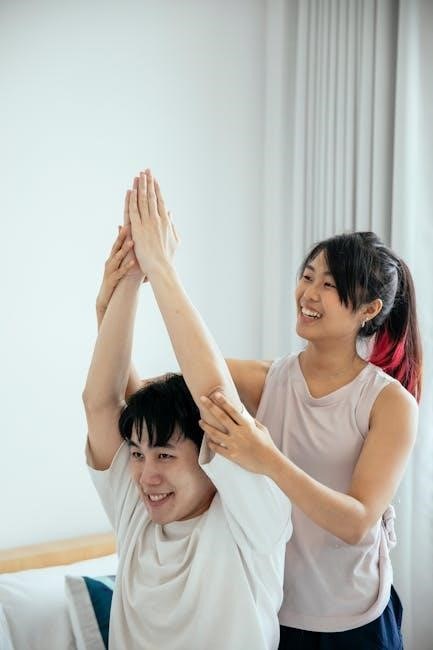
Prioritize self-awareness; listen intently to your body’s signals, avoiding pushing through pain. Seek guidance if you have pre-existing conditions or experience discomfort during practice.
Listening to Your Body
Somatic work fundamentally emphasizes internal awareness, making attentive listening to your body paramount. Unlike pushing through pain in conventional exercise, somatic exercises invite gentle exploration and noticing. Pay close attention to sensations – not just pain, but also subtle shifts in tension, temperature, or energy flow.
Begin each session with a body scan, observing areas of tightness or restriction without judgment. As you move, notice if an exercise creates discomfort; modify or stop if needed. Remember, the goal isn’t to achieve a specific pose or range of motion, but to re-establish the connection between mind and body.
Respect your body’s limits, recognizing that some days you may have more or less capacity. Avoid forcing movements, and prioritize slow, mindful execution over speed or intensity. This practice cultivates a deeper understanding of your body’s needs, fostering a safe and effective somatic experience.
Contraindications for Somatic Exercises
While generally gentle, somatic exercises aren’t suitable for everyone without professional guidance. Individuals with acute injuries, severe pain, or recent surgeries should consult a healthcare provider before starting any new movement practice.
Those with certain medical conditions, such as unstable spinal conditions, active osteoporosis, or acute inflammatory conditions, may need modifications or should avoid specific exercises. Similarly, individuals with a history of trauma may experience emotional release during somatic work, potentially requiring support from a therapist.
Pregnant individuals should modify exercises to accommodate their changing bodies and consult with a qualified prenatal movement instructor. Always prioritize safety and listen to your body; if an exercise exacerbates symptoms, discontinue it immediately and seek professional advice.
When to Seek Professional Guidance
If you experience persistent or worsening pain during somatic exercises, it’s crucial to consult a healthcare professional. Similarly, if you have underlying medical conditions, a history of trauma, or are unsure about the suitability of these exercises for your specific needs, seeking guidance is essential.
A qualified somatic movement therapist can provide personalized instruction, modifications, and support, ensuring safe and effective practice. They can also help address emotional releases that may arise during somatic work, offering a safe container for processing.
Consider professional guidance if you’re struggling to implement the exercises correctly, aren’t experiencing the desired benefits, or feel overwhelmed by the process. Remember, somatic work is a journey, and professional support can significantly enhance your experience and outcomes.