
iLife robotic vacuums offer convenient, automated cleaning solutions, supported by detailed manuals available on their official website.
These manuals guide users through setup, operation, and maintenance for optimal performance.
Launched at CES 2018, models like the A8 showcase advanced features, while others, such as the A4s and V5s Pro, provide essential cleaning capabilities.
iLife prioritizes user experience, offering resources and support to ensure customers maximize their robot vacuum’s potential.
What is an iLife Robot Vacuum?
iLife robot vacuums are intelligently designed, automated cleaning devices intended to simplify household chores.
These robots navigate your floors, removing dust and debris with minimal user intervention, as detailed in their comprehensive manuals.
iLife offers a range of models, from basic cleaning solutions like the A4s to advanced options like the A8 with 360-degree PanoView navigation.
Each model’s manual provides specific instructions for optimal use.
The manuals emphasize ease of use, guiding owners through setup, operation, and routine maintenance to ensure peak cleaning performance and longevity of the device.
Popular iLife Models (A4s, V5s Pro, A8, B5 Max)
iLife’s popular models each have dedicated manuals outlining their unique features. The A4s is a foundational model, while the V5s Pro offers enhanced cleaning capabilities.
The A8 stands out with its PanoView navigation, thoroughly explained in its manual, and the B5 Max provides robust performance.
These manuals detail specific instructions for each robot, covering everything from initial setup and Wi-Fi connection to troubleshooting common issues and maximizing cleaning efficiency.

Getting Started with Your iLife Robot Vacuum
Refer to your iLife robot’s manual for unboxing instructions, component checklists, and charging guidelines.
The manual will guide initial setup, including Wi-Fi connection, ensuring a smooth start to automated cleaning.
Unboxing and Component Checklist
Carefully unpack your iLife robot vacuum and verify all components are present, referencing the manual for a detailed list.
Typically, you should find the robot itself, a charging base, a power adapter, a remote control, side brushes, a cleaning tool, and potentially extra filters or a boundary strip.
The manual illustrates each component and its purpose, ensuring you understand everything included before proceeding with setup. Retain the packaging for potential returns or warranty claims.
Charging the Robot Vacuum
Before first use, fully charge your iLife robot vacuum. Connect the power adapter to the charging base and plug it into a wall outlet.
Place the robot onto the charging base, ensuring the charging contacts align – the manual provides a clear diagram.
Charging time varies by model, but typically takes several hours. The robot’s indicator light will signal charging status and completion, as detailed in your user manual.
Initial Setup and Wi-Fi Connection
Refer to your iLife robot vacuum’s manual for specific instructions on initial setup. Download the iLife app from your app store and create an account.
Follow the in-app prompts to connect your robot to your home Wi-Fi network. Ensure your Wi-Fi is 2.4GHz, as most models don’t support 5GHz.
The manual will guide you through the pairing process, often involving pressing buttons on the robot itself.
Understanding the Control Panel & Remote
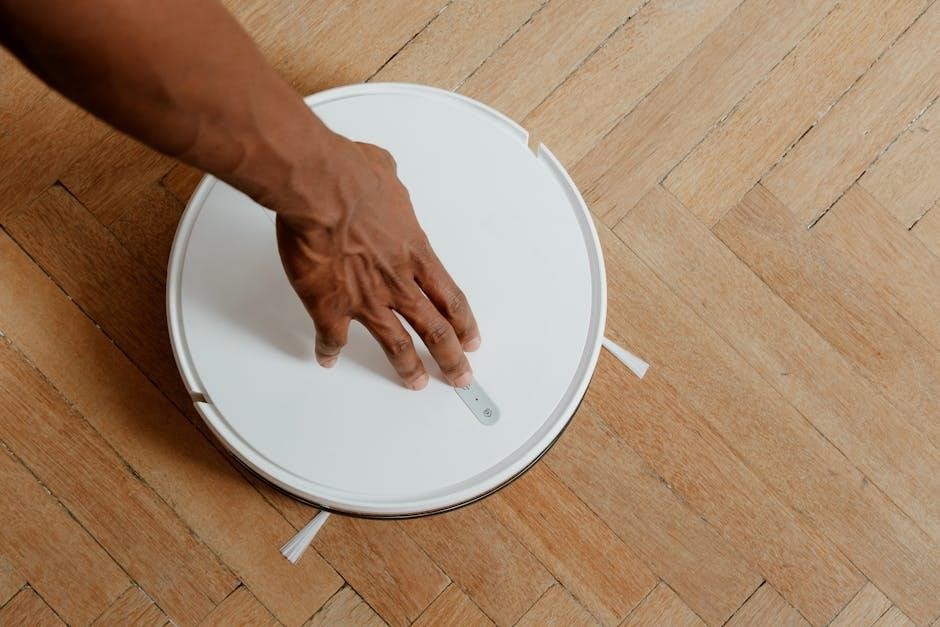
iLife robot vacuum manuals detail button functions and indicator lights on both the robot and remote control.
These resources explain how to initiate cleaning modes and navigate the robot’s features effectively.
Button Functions and Indicators
iLife robot vacuum manuals thoroughly explain each button’s purpose on the control panel, including power, auto-clean, spot clean, and home return.
Indicator lights signal operational status – charging, cleaning, low battery, or error messages – providing crucial feedback to the user. Understanding these visual cues, as detailed in the manual, ensures efficient operation and quick troubleshooting. The manual also clarifies how different light patterns correspond to specific robot actions.
Remote Control Features
The iLife robot vacuum remote, detailed in the user manual, offers expanded control beyond the onboard buttons. Features include directional control for manual steering, adjustable suction power settings, and scheduling options for automated cleaning.
The manual clarifies how to utilize the remote to initiate spot cleaning, activate edge cleaning modes, and send the robot back to its charging base efficiently. It also explains indicator light meanings on the remote itself.
Cleaning Modes and Scheduling
iLife manuals detail various cleaning modes – Auto, Spot, and Edge – alongside scheduling features. Users can customize cleaning routines for convenience and efficiency.
The manual guides setting cleaning times and adjusting modes via the remote or app, ensuring a tailored cleaning experience.
Auto Cleaning Mode
iLife manuals explain that Auto Cleaning Mode allows the robot to systematically clean your entire floor area. The robot intelligently navigates rooms, adjusting its path to maximize coverage and efficiency.
This mode is ideal for general, everyday cleaning, requiring minimal user intervention. The manual emphasizes that before initiating Auto Cleaning, it’s best to prepare the room by removing obstacles like cables and small objects.
The robot will automatically return to its charging base when cleaning is complete or battery levels are low, as detailed in the user manual.
Spot Cleaning Mode
iLife robot vacuum manuals describe Spot Cleaning Mode as a focused cleaning function for concentrated messes. To activate, place the robot in the center of the area needing attention and select this mode via the remote or control panel.
The robot will then spiral outwards, thoroughly cleaning a roughly 3ft x 3ft area. This mode is perfect for spills or localized dirt, as highlighted in the user manual.
Once finished, the robot automatically stops and returns to its previous location.
Scheduled Cleaning – Setting and Adjusting
iLife robot vacuum manuals detail how to schedule cleanings for automated convenience. Using the remote or app (if Wi-Fi connected), users can set specific times and days for the robot to operate.
The manual explains adjusting schedules is simple – just re-enter the desired time and days. Ensure the robot is adequately charged before a scheduled cleaning begins for optimal performance.
Regular scheduling maintains consistent floor cleanliness with minimal user intervention.
Maintenance and Troubleshooting
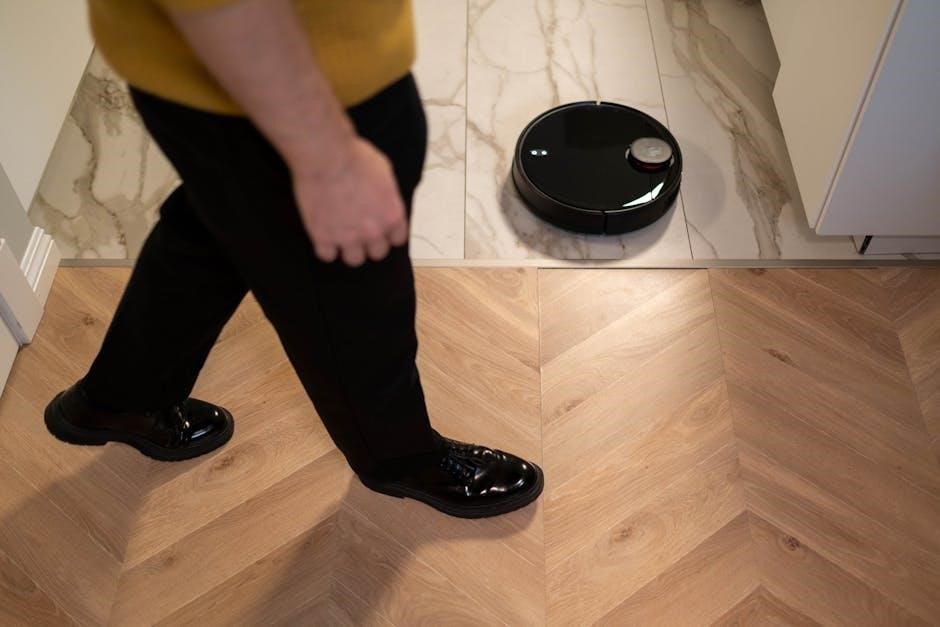
iLife manuals emphasize regular dustbin emptying, brush, and filter cleaning for peak performance. They also provide solutions for common error codes and issues.
Following these guidelines ensures your robot vacuum operates efficiently and extends its lifespan, as detailed in the user manual.
Emptying the Dustbin
iLife manuals consistently highlight the importance of frequent dustbin emptying for maintaining optimal suction power and cleaning performance. Regularly check and empty the dustbin after each use, or more often if cleaning large areas.
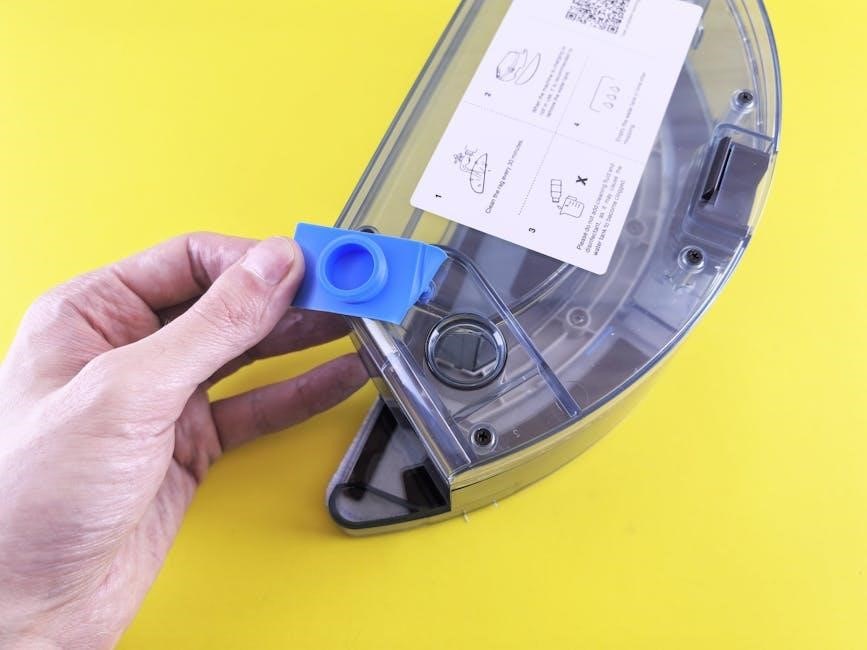
To empty, remove the dustbin from the robot, open the release latch, and dispose of the collected debris. Ensure the dustbin and filter are properly reinstalled before resuming cleaning. Neglecting this simple step can significantly reduce cleaning effectiveness.
Cleaning the Brushes and Filters
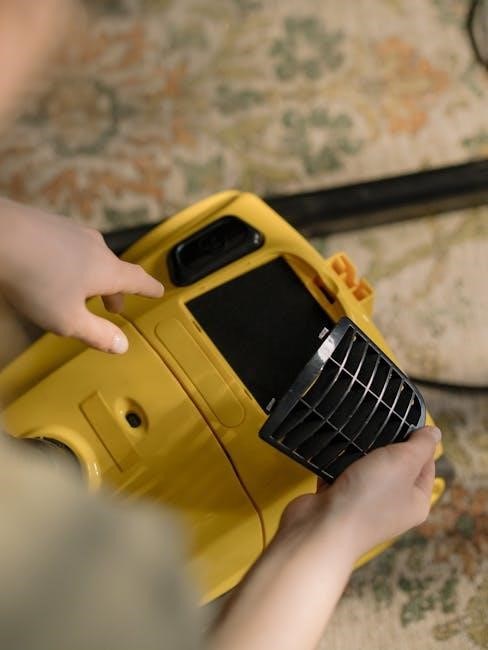
iLife manuals emphasize regular brush and filter cleaning to uphold peak performance. Remove the main and side brushes, clearing any tangled hair or debris. Clean the filters by gently tapping them to dislodge dust; avoid washing them.
Inspect brushes for wear and replace as needed. A clogged filter or tangled brush hinders suction. Consistent maintenance, as detailed in the manual, extends the robot’s lifespan and cleaning efficiency.
Common Issues and Solutions (Error Codes)
iLife manuals detail troubleshooting steps for frequent issues. Error codes indicate specific problems – consult the manual for their meanings. A robot not charging may require a reset or checking the power adapter.
Poor cleaning often stems from full dustbins or clogged brushes. If the robot stops unexpectedly, check for obstructions. The manual provides comprehensive guidance for resolving these and other common errors.
Advanced Features & Navigation
iLife manuals explain features like PanoView navigation (A8 model) and the use of virtual walls. These tools enhance cleaning efficiency and control.
Understanding these advanced functions, detailed in the manual, optimizes your robot’s performance.
PanoView Navigation (A8 Model)
iLife A8’s PanoView Navigation, thoroughly explained in the user manual, utilizes a 360-degree scanning system for intelligent home mapping. This allows the robot to systematically clean, avoiding random bumping and ensuring comprehensive coverage.
The manual details how PanoView creates a virtual map, enabling efficient route planning and optimized cleaning paths. Users can leverage this technology for targeted cleaning and customized schedules, maximizing cleaning effectiveness.
Refer to the manual for specific instructions on utilizing PanoView’s features and troubleshooting any navigation-related issues.
Virtual Walls and Boundary Strips
The iLife robot vacuum manual explains how to utilize virtual walls and boundary strips to restrict cleaning access to specific areas. These tools, often magnetic, prevent the robot from entering unwanted zones, protecting delicate items or keeping it out of rooms.
The manual provides detailed placement instructions for optimal effectiveness, ensuring the robot recognizes and respects the defined boundaries. Proper setup prevents the robot from getting stuck or damaging sensitive objects.
Consult the manual for model-specific guidance on virtual wall and boundary strip compatibility and usage.

Safety Precautions and Warnings
iLife manuals emphasize general safety guidelines, advising users to avoid robot damage and potential hazards. Always read the manual before operation!
Ensure proper usage and prevent issues by following all outlined warnings and precautions detailed within the provided documentation.
General Safety Guidelines
iLife manuals consistently stress the importance of reading all instructions before operating the robot vacuum. This ensures safe and effective use, preventing potential damage to the unit or your home.
Always supervise the robot during its initial runs to observe its behavior and identify any potential obstacles or hazards. Keep children and pets away during operation, and never allow the robot to clean over loose cords or wet floors.
Disconnect the robot from its charging base before performing any maintenance or cleaning procedures, as outlined in the manual.
Avoiding Damage to the Robot and Surroundings
iLife manuals emphasize preventing the robot from encountering small objects, cords, or fragile items that could cause damage or become entangled. Regularly inspect the cleaning path for potential hazards.
Avoid using the robot on dark-colored carpets, as they may be mistaken for drop-off points. Do not allow the robot to ingest liquids or operate in excessively dusty environments without proper filter maintenance.
Proper care, as detailed in the manual, extends the lifespan of your iLife robot and protects your home’s furnishings.
iLife Robot Vacuum Manual Resources
iLife provides comprehensive manuals on their official website (www.iliferobot.com), offering detailed guidance and support for all models.
Access FAQs and support resources to troubleshoot issues and optimize your robot vacuum’s performance.
Official iLife Website for Manuals
iLife’s official website, located at www.iliferobot.com, serves as the primary hub for accessing detailed product manuals in multiple languages, including English, French, and Spanish.
Users can easily locate the specific manual corresponding to their iLife robot vacuum model – such as the A4s, V5s Pro, or A8 – through a streamlined search function or by browsing the product catalog.
These downloadable manuals cover everything from initial setup and operation to troubleshooting common issues, ensuring users have the information needed for optimal performance and longevity of their device.
Accessing Support and FAQs
iLife provides comprehensive customer support resources alongside its downloadable manuals, aiming to resolve user queries efficiently.
The official website features a dedicated FAQ section addressing common issues and providing step-by-step solutions, minimizing the need for direct contact.
For more complex problems, users can access support channels, ensuring assistance with their iLife robot vacuum, maximizing its cleaning performance and overall user satisfaction.
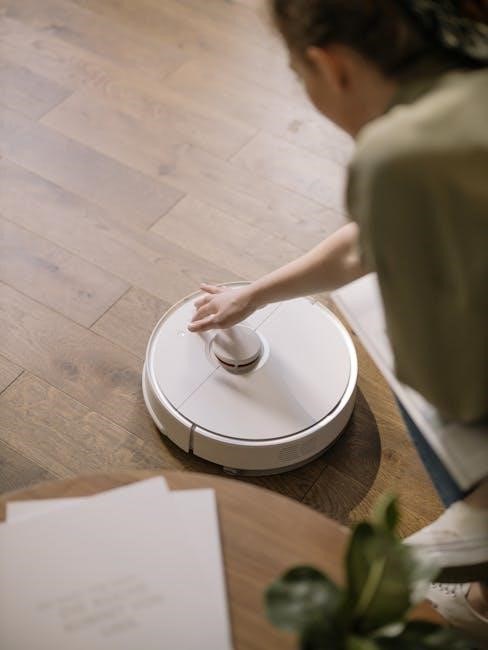
Filter Replacement Guide
iLife manuals detail filter types and replacement frequencies, crucial for maintaining suction and air quality.
Regular filter changes, as outlined in the manual, ensure optimal robot performance and prolong its lifespan.
Types of Filters Used
iLife robot vacuums commonly utilize a two-stage filtration system, incorporating both a primary filter and a HEPA filter.
The primary filter captures larger debris, protecting the motor, while the HEPA filter traps microscopic particles like dust mites and allergens.
Manuals specify filter compatibility for each model; using incorrect filters can reduce cleaning efficiency and potentially damage the unit.
Some models may also include sponge filters for pre-filtration, extending the life of the main filters.
Frequency of Filter Replacement
iLife manuals recommend cleaning filters after each use to maintain optimal suction power and performance.
Complete filter replacement frequency varies by model and usage, but generally, the primary filter should be replaced every 1-2 months.
HEPA filters typically require replacement every 3-6 months, depending on dust exposure and cleaning frequency.
More frequent replacement is advised for homes with pets or allergy sufferers to ensure effective air filtration.

Brush Maintenance
iLife manuals detail regular brush cleaning to remove debris and tangles, ensuring optimal cleaning performance.
Side brushes should be replaced periodically, while the main brush requires frequent cleaning and occasional replacement.
Main Brush Cleaning
iLife manuals emphasize the importance of routinely cleaning the main brush to maintain peak suction and cleaning effectiveness. Begin by switching off the robot and removing the brush cover.
Carefully extract the main brush and use the provided cleaning tool to remove any tangled hair, fibers, or debris wrapped around it. Ensure the brush spins freely after cleaning. A clogged brush significantly reduces cleaning performance, so consistent maintenance is crucial.
Side Brush Replacement
iLife manuals recommend periodically replacing the side brushes, as they wear down over time, impacting edge cleaning performance. To replace, gently pull the worn brush straight off its mounting.
Align the new side brush with the mounting post and press firmly until it clicks into place. Regularly checking and replacing these brushes ensures optimal coverage and effective cleaning along walls and corners, maintaining a spotless home.
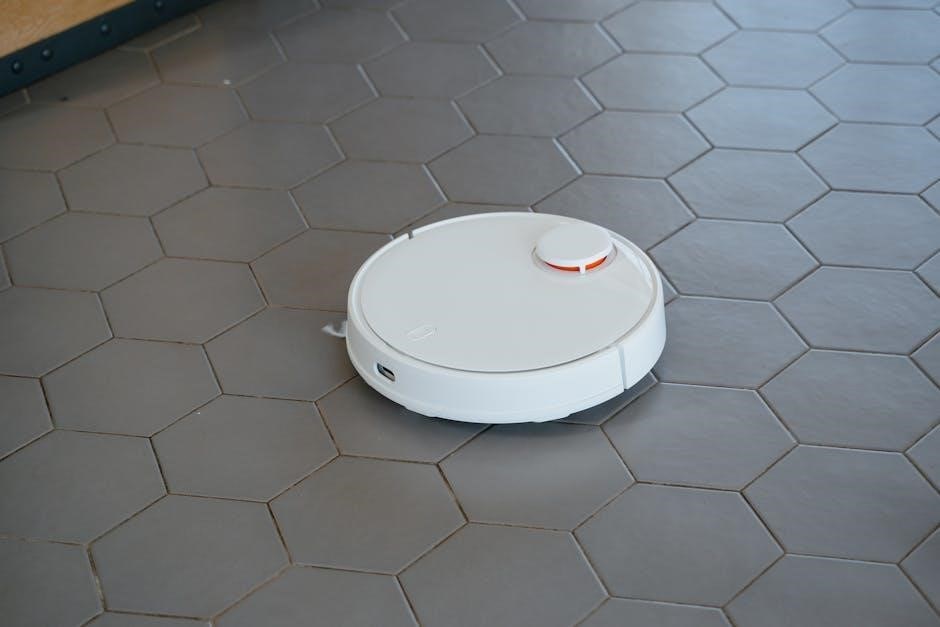
Troubleshooting Common Problems
iLife manuals detail solutions for issues like charging failures or ineffective cleaning. Error codes provide diagnostic clues, guiding users toward quick resolutions for optimal performance.
Robot Not Charging
iLife manuals address charging issues by first verifying the power adapter and charging base connection. Ensure the robot is correctly positioned on the base, with no obstructions.
Check for debris on the charging contacts of both the robot and the base, cleaning them with a dry cloth. If the problem persists, consult the manual for specific error codes or contact iLife support for further assistance.
Robot Not Cleaning Effectively
iLife manuals recommend regularly emptying the dustbin and cleaning the brushes and filters for optimal cleaning performance. Check for tangled hair or debris on the main and side brushes, removing any obstructions.
Ensure filters are clean and properly installed; replace them as needed, following the manual’s guidelines. If issues continue, verify the suction power setting and check for blocked suction pathways.