
Understanding IT Band Syndrome
IT Band Syndrome (ITBS) arises from hip and glute weakness; strengthening these areas is crucial for recovery and prevention, requiring consistent, dedicated training.
Core strengthening, alongside hamstring and IT band flexibility exercises, is essential for success, minimizing patellofemoral irritability and promoting stability.

A conservative return to running, starting with intervals like run one minute, walk one minute, can be attempted when feeling improved, but proceed cautiously.
What is the IT Band?
The iliotibial (IT) band is a thick band of fibrous tissue that runs along the outside of the thigh, extending from the hip to just below the knee; It’s not a muscle itself, but rather a strong connective tissue that plays a crucial role in stabilizing the knee and hip during movement.
Contrary to popular belief, ITBS isn’t typically caused by the IT band being “tight” – it’s more often due to friction between the IT band and the bony prominence of the femur (thigh bone) as it rubs during knee flexion and extension. This friction leads to inflammation and pain.
Weakness in the hip abductors and gluteal muscles is a significant contributing factor, as these muscles help control leg and knee alignment. When these muscles are weak, the IT band has to work harder, increasing friction and the risk of developing ITBS. Strengthening these areas is paramount for both treatment and prevention, alongside focused flexibility work.
Causes of IT Band Syndrome
IT Band Syndrome (ITBS) doesn’t stem from a single cause, but rather a combination of biomechanical factors and training errors. A primary driver is weakness in the hip abductors – specifically the gluteus medius – and gluteal muscles. This weakness leads to poor form and increased stress on the IT band.
Overuse is a common culprit, particularly in runners, cyclists, and athletes involved in repetitive knee bending activities. Rapid increases in training intensity or mileage without adequate preparation can overwhelm the IT band’s capacity.
Anatomical factors, such as leg length discrepancies or differences in foot pronation, can also contribute. Improper footwear or running on uneven surfaces can exacerbate these issues; Core weakness plays a role, as it impacts overall stability and alignment. Addressing these underlying factors through targeted exercises is key to resolving ITBS;
Common Symptoms
The hallmark symptom of IT Band Syndrome (ITBS) is pain on the outside of the knee. This pain often radiates up the thigh and can sometimes extend down to the calf. Initially, discomfort may only appear during or after activity, but it can progressively worsen and become present even at rest.
Pain is typically sharp and burning, and is aggravated by activities like running, cycling, stair climbing, or prolonged sitting with bent knees. A snapping sensation may be felt as the IT band rubs over the lateral femoral epicondyle (the bony prominence on the outside of the knee).
Tenderness to the touch is common along the IT band, particularly just above the knee. Swelling is usually minimal, but inflammation can contribute to discomfort. Ignoring these symptoms can lead to chronic pain and limitations in activity. Early recognition and intervention are crucial.

Diagnosis and Assessment
Accurate diagnosis involves a physical examination to assess pain location, range of motion, and tenderness along the IT band. Ruling out other conditions is vital for effective treatment planning.
Physical Examination Techniques
A thorough physical examination is paramount in diagnosing IT Band Syndrome. Clinicians will palpate along the iliotibial band, identifying areas of tenderness, typically located just above the lateral epicondyle of the femur. Ober’s test is commonly employed; it assesses IT band tightness by observing the degree of knee abduction when the patient lies on their side with the affected leg raised.
The Noble Compression Test involves applying pressure to the lateral femoral epicondyle while the patient actively flexes and extends their knee, often reproducing the characteristic pain. Evaluating hip strength, particularly gluteus medius and maximus, is crucial, as weakness in these muscles contributes significantly to ITBS. Assessing lower limb alignment and biomechanics during gait analysis can reveal contributing factors like leg length discrepancies or excessive pronation.
Range of motion assessments of the hip, knee, and ankle are also performed to identify any limitations that may exacerbate the condition. Careful observation of the patient’s movement patterns during functional activities, such as squatting or lunging, can provide valuable insights.
Ruling Out Other Conditions
Accurate diagnosis necessitates differentiating IT Band Syndrome from other conditions presenting with similar lateral knee pain. Meniscal tears, particularly those affecting the lateral meniscus, must be considered and assessed through specific clinical tests like the McMurray test. Lateral collateral ligament (LCL) sprains also cause lateral knee discomfort and require evaluation for ligamentous instability.
Patellofemoral pain syndrome (PFPS) can mimic ITBS, so a comprehensive patellar assessment, including palpation and tracking evaluation, is essential. Bursitis, specifically pes anserinus bursitis, located slightly medial to the IT band, needs to be ruled out through palpation and assessment of pain location.
Referred pain from the hip or lower back should also be considered, necessitating a hip and lumbar spine examination. Imaging studies, such as X-rays, may be used to exclude structural abnormalities, while MRI can help identify meniscal tears or ligamentous injuries if clinical suspicion is high.

IT Band Syndrome Exercises: A Comprehensive Plan
A phased approach – pain reduction, strengthening, and functional exercises – is vital for ITBS recovery. Consistent dedication to core, glute, and hip work is key.
Phase 1: Pain Reduction & Inflammation Control
Initial management focuses on decreasing pain and inflammation surrounding the IT band. Foam rolling is a cornerstone technique; gently roll along the outer thigh, avoiding direct pressure on the knee joint. This helps release tension and improve tissue flexibility.
Static stretching targeting the hamstrings and quadriceps is also crucial. Hold each stretch for 30 seconds, focusing on a gentle, comfortable stretch – avoid bouncing. Prioritize stretches that don’t exacerbate pain.
Remember to listen to your body and modify exercises as needed. This phase isn’t about aggressive stretching or pushing through pain, but rather creating a foundation for subsequent strengthening. Maintaining a comfortable position throughout each exercise is paramount. The goal is to reduce irritation and prepare the tissues for more demanding work in later phases.

Foam Rolling Exercises for the IT Band
Begin by positioning yourself sideways, supporting your weight on your forearm and the outer leg. Slowly roll from just above the knee to the hip, pausing on tender spots for 20-30 seconds. Avoid rolling directly over the knee joint itself; focus on the muscle tissue surrounding it.
Control the movement and maintain a slow, deliberate pace. The sensation should be discomfort, not sharp pain. If pain is significant, reduce pressure or modify the exercise. Consider using a softer foam roller initially, progressing to a firmer one as tolerance increases.
Repeat this process for 2-3 sets, performing 10-15 passes along the IT band. Incorporate small hip flexes and extensions during the rolling to target different areas of the muscle. Consistency is key – aim to foam roll daily or several times a week for optimal results.
Static Stretching – Hamstrings & Quads
Hamstring stretches are vital; try the towel stretch – lying on your back, loop a towel around your foot, and gently pull your leg towards you, keeping it straight. Hold for 30 seconds, repeating 2-3 times per leg. Another option is the seated forward fold, reaching towards your toes while maintaining a straight back.
Quadriceps stretches can be performed standing, holding your foot towards your glutes. Ensure your knees are close together and maintain a neutral spine. Hold for 30 seconds, repeating 2-3 times per leg. Alternatively, perform a lying quad stretch, pulling your heel towards your buttock while lying on your side.
Remember to breathe deeply throughout each stretch and avoid bouncing. Static stretching should be performed gently, focusing on lengthening the muscle without causing pain. Incorporate these stretches after foam rolling or as part of your cool-down routine.
Phase 2: Strengthening Exercises

Transitioning to strengthening is crucial after pain reduction. This phase focuses on building strength in the glutes, hip abductors, and core – areas often weak in individuals with IT Band Syndrome. Strengthening these muscles helps stabilize the hips and knees, reducing stress on the IT band.
Prioritize exercises like clamshells and monster walks with therabands to target the gluteus medius. Side leg raises effectively strengthen hip abductors. Core stability is paramount; incorporate planks and bridges into your routine.
Focus on proper form over the number of repetitions. Begin with 2-3 sets of 10-15 repetitions for each exercise. Gradually increase the resistance or repetitions as you gain strength. Consistency is key to achieving lasting results and preventing recurrence.
Glute Strengthening Exercises (Clamshells, Monster Walks)
Clamshells effectively target the gluteus medius, a key stabilizer of the hip. Lie on your side with knees bent and feet stacked. Keeping feet together, lift your top knee, maintaining core engagement. Perform 2-3 sets of 15-20 repetitions.
Monster walks, utilizing a resistance band around the ankles or thighs, further challenge the gluteus medius. Maintain a slight squat position and take small, controlled steps sideways. Focus on keeping tension on the band throughout the exercise. Complete 2-3 sets of 10-12 steps in each direction.
Proper form is vital; avoid arching your back or rotating your hips. These exercises, when performed correctly, build strength and endurance in the glutes, contributing significantly to IT band stability and pain reduction.
Hip Abductor Strengthening (Side Leg Raises)
Side leg raises are crucial for strengthening the hip abductors, muscles vital for stabilizing the pelvis during movement and reducing stress on the IT band. Lie on your side with legs extended and stacked. Keeping your body in a straight line, slowly lift your top leg towards the ceiling, maintaining core engagement.
Avoid rotating your hip or leaning forward. Lower the leg slowly and repeat. Perform 2-3 sets of 15-20 repetitions on each side. For increased challenge, consider adding an ankle weight.
Focus on controlled movements and proper form to maximize effectiveness and prevent injury. Strengthening these muscles helps correct biomechanical imbalances that contribute to IT band syndrome, promoting long-term relief and improved function.
Core Strengthening Exercises (Planks, Bridges)
A strong core is fundamental for stabilizing the pelvis and spine, directly impacting IT band function and reducing strain. Planks engage multiple core muscles simultaneously. Maintain a straight line from head to heels, holding the position for 30-60 seconds, repeating 2-3 times. Focus on bracing your core and avoiding sagging hips.
Glute Bridges target the glutes and hamstrings, further enhancing pelvic stability. Lie on your back with knees bent and feet flat. Lift your hips off the ground, squeezing your glutes at the top. Hold for a few seconds, then lower slowly. Perform 2-3 sets of 15-20 repetitions.
Multi-modal abdominal and pelvic strengthening is critical, minimizing patellofemoral irritability and promoting overall stability. Consistent core work is essential for long-term IT band syndrome management.
Phase 3: Functional Exercises & Return to Activity
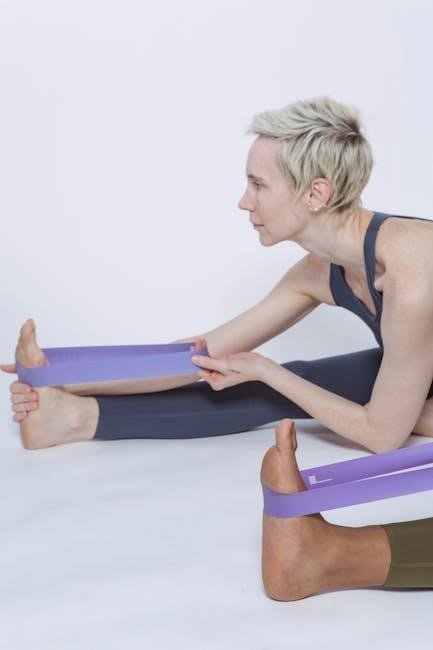
This phase focuses on reintegrating movement patterns specific to your activity, gradually increasing load and complexity. Squats and Lunges, performed with impeccable form, are crucial. Ensure your knees track over your toes and maintain a neutral spine. Start with bodyweight and progress to weighted variations cautiously.
Single Leg Balance Exercises enhance proprioception and stability. Stand on one leg, maintaining balance for 30-60 seconds. Progress by closing your eyes or adding perturbations. Proprioceptive Exercises, utilizing a balance board, further challenge your stability and neuromuscular control.
A conservative return to running, like interval training (run 1 minute, walk 1 minute), is a good starting point. Listen to your body and avoid pushing through pain. Gradual progression is key to preventing re-injury.
Squats & Lunges (Proper Form Focus)
Mastering proper form is paramount when performing squats and lunges to avoid exacerbating IT Band Syndrome. Squats should initiate with a hip hinge, maintaining a neutral spine and chest up. Descend as if sitting into a chair, ensuring your knees track in line with your toes – avoid inward collapse.
Lunges require a similar focus on alignment. Step forward, lowering your body until both knees are bent at 90 degrees. Keep your front knee over your ankle and your back knee hovering just above the ground. Engage your core throughout the movement.
Begin with bodyweight variations, gradually adding resistance with dumbbells or a barbell as strength improves. Prioritize controlled movements over speed or heavy weight. If pain arises, immediately modify or discontinue the exercise.
Single Leg Balance Exercises
Single leg balance exercises are crucial for restoring proprioception and strengthening the stabilizing muscles around the hip and knee, vital for IT Band Syndrome recovery. Begin by simply standing on one leg, maintaining a neutral spine and engaged core. Aim for 30-60 seconds, gradually increasing the duration as balance improves.
Progress by adding challenges: close your eyes, perform small arm movements, or stand on an uneven surface like a pillow or foam pad. These variations increase the demand on your balance mechanisms.
Focus on maintaining proper alignment – avoid hip hiking or excessive knee bending. Incorporate gentle movements like leg swings or ankle circles while balanced. These exercises enhance dynamic stability and prepare you for functional activities. Remember to perform on both legs equally.
Proprioceptive Exercises (Balance Board)
Proprioceptive exercises utilizing a balance board are a fantastic progression from single-leg balance, significantly challenging your body’s awareness of joint position and movement – crucial for IT Band Syndrome rehabilitation. Start with two feet on the board, focusing on maintaining a level surface by making small, controlled adjustments.
Progress to single-leg use, aiming for 30-60 second holds. Encourage subtle movements in all directions, resisting the urge to ‘grip’ tightly. This enhances neuromuscular control and strengthens the stabilizing muscles around the hip, knee, and ankle.
Introduce dynamic movements like gentle squats or reaching motions while balanced. This mimics real-life activities and prepares you for a return to running or other sports. Remember to prioritize controlled movements and proper form over speed or amplitude.

Preventative Measures
Consistent warm-up and cool-down routines, alongside mindful footwear choices and potential orthotic use, are vital for preventing ITBS recurrence and maintaining optimal biomechanics.
Proper Warm-up & Cool-down Routines
Prioritizing a dynamic warm-up before activity is paramount in preventing IT Band Syndrome. This should include leg swings (forward, backward, and lateral), high knees, butt kicks, and torso twists to increase blood flow and prepare muscles for exertion. A focused warm-up enhances flexibility and reduces stiffness, minimizing strain on the IT band.
Equally important is a thorough cool-down post-exercise. Static stretches, holding each for 30 seconds, targeting the hamstrings, quadriceps, glutes, and hip flexors, are essential. Foam rolling the IT band, quads, and hamstrings can further alleviate tension and promote recovery.
Remember, consistency is key. Incorporating these routines into every workout, even light ones, significantly reduces the risk of ITBS development and recurrence. Ignoring these preventative steps can lead to chronic pain and prolonged recovery periods.
Footwear and Orthotics Considerations
Proper footwear plays a critical role in mitigating IT Band Syndrome; Runners, in particular, should seek shoes offering adequate cushioning and support, appropriate for their foot type and gait. Overpronation, where the foot rolls inward excessively, can exacerbate ITBS, so stability shoes are often recommended.
Orthotics can be invaluable for addressing biomechanical imbalances. Custom or over-the-counter orthotics can correct foot posture, reducing stress on the lower limbs and, consequently, the IT band. Consulting a podiatrist or physical therapist for a gait analysis is crucial to determine if orthotics are necessary.
Regularly assess your shoes for wear and tear. Worn-out shoes lose their supportive properties, increasing the risk of injury. Replacing shoes every 300-500 miles is generally advised. Prioritizing appropriate footwear and considering orthotics are proactive steps towards preventing and managing ITBS.

Resources & Further Information (PDF Downloads)
Comprehensive exercise guides are available for download to support your IT Band Syndrome recovery. These PDFs detail Phase 1 (pain reduction), Phase 2 (strengthening), and Phase 3 (functional exercises) with illustrations and detailed instructions. Focus on glute and core strengthening, as weakness in these areas is a primary contributor to ITBS.
Downloadable resources also include stretching protocols for hamstrings and quadriceps, crucial for improving flexibility and reducing IT band tension. Remember proper form is paramount to avoid exacerbating the condition. Seek guidance from a physical therapist if unsure.
Additional PDFs cover preventative measures, including warm-up and cool-down routines, and footwear considerations. Access these resources to create a holistic recovery plan. Links to reputable organizations offering further information on ITBS and related conditions are also provided below.